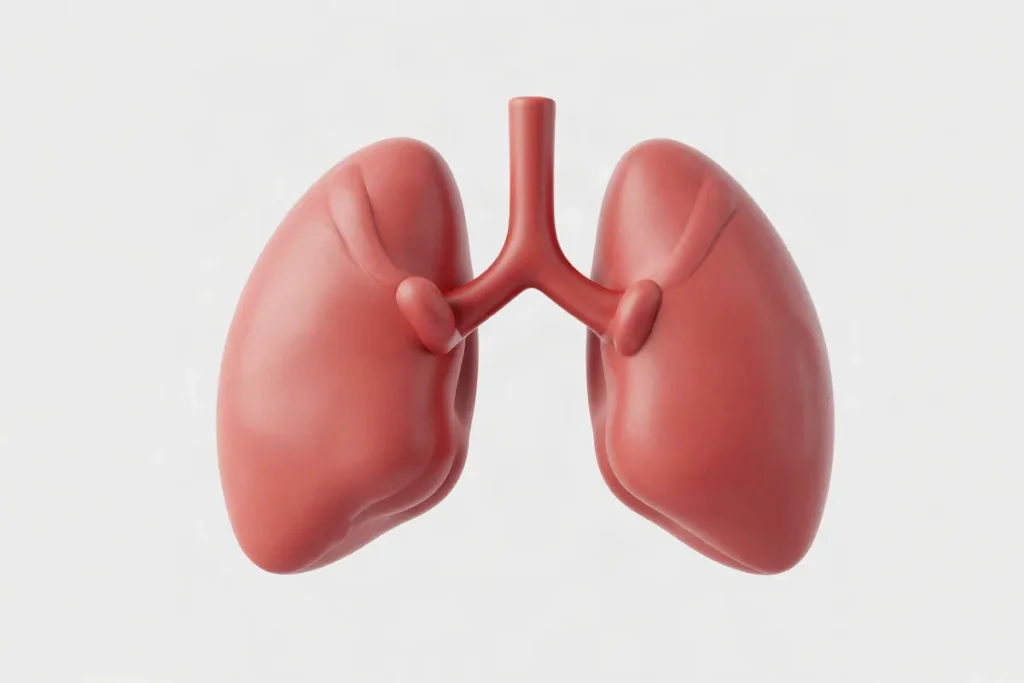
The first breath happens when the lungs begin to expand and fill with air after birth. Breathing starts thanks to the changes that occur as a baby moves from life in the womb to life outside the mother’s body.
Before birth, oxygen reaches the baby through the placenta, and the lungs do not work as they do after birth. The first breath then helps establish independent gas exchange. Here’s how a newborn’s breathing begins and why the first few minutes matter.
| Situation | What is assessed | What to do |
|---|---|---|
| Irregular breathing with no other concerning signs | Breathing rhythm and the baby’s overall condition | Tell a healthcare professional about what you observed during the examination |
| Labored breathing | How the respiratory and cardiovascular systems are working | Medical assessment is needed |
| Pale or bluish skin | Skin and mucous membrane color, along with other signs | Seek medical attention |
| Initial examination in the delivery room | Breathing, circulation, reflexes, weight, length, and head and chest circumference | The examination is performed by a neonatologist |
- about 60 million alveoli are formed in a baby by the time of birth
- 6 times fewer alveoli in a newborn than in an adult
- 8–12 years the age by which the number of alveoli reaches the required level
- about 300 million in each lung the number of alveoli reached by age 8–12
- 30 or 15 seconds the interval for counting breaths, then multiplying the result by 2 or 4
What triggers a newborn’s first breath?
A newborn’s first breath is triggered by a sudden buildup of carbon dioxide in the blood, not by a lack of oxygen. Before birth, the baby’s gas exchange is connected to circulation through the placenta; after birth, the lungs begin to take part in independent breathing.
The first breathing movement is part of the transition to life outside the mother’s body, not simply the mechanical “opening” of the lungs. By the time of birth, a baby has about 60 million alveoli—6 times fewer than an adult. The lungs begin working in conditions different from those in the womb, and breathing is not established with a single breath.
The first breath and assessment of breathing
The first breath and the subsequent establishment of breathing are separate stages: once breathing begins, it is important to assess how effective it is. Immediately after birth, a neonatologist examines the baby in the delivery room, including assessing the respiratory and cardiovascular systems. So the fact that a baby has taken a first breath does not yet mean that breathing has become steady.
What changes in the lungs and circulation after birth?
The lungs
After birth, the lungs shift from gas exchange in the womb to breathing air, and circulation adapts along with them. By the time of birth, a baby has about 60 million alveoli—6 times fewer than an adult.
Alveoli are small air-filled structures in the lungs where gas exchange takes place. Their number continues to increase during childhood: it reaches the required level—about 300 million in each lung—only by age 8–12.
Circulation
In the fetus, some of the blood from the right atrium flows into the left through the oval foramen. After birth, the lungs begin to take part in gas exchange, and blood flow adapts: the changes affect not only the lungs but also the cardiovascular system.
What does a neonatologist check right after birth?
Immediately after birth, a neonatologist assesses the baby’s respiratory and cardiovascular systems to determine whether the baby needs additional help and monitoring. The examination takes place in the delivery room and includes checking primitive reflexes, assessing the color of the skin and mucous membranes, and looking for possible injuries, defects, and signs of infection.
The neonatologist measures the newborn’s weight and length, as well as head and chest circumference. These measurements complement the examination: the doctor also assesses the baby’s appearance and responses to form an initial picture of the baby’s condition right after birth.
Why the Apgar score is used
The Apgar score, proposed by anesthesiologist Virginia Apgar, is used for the initial assessment. It helps identify which babies need more attention; the score helps the doctor determine which newborns need closer monitoring or assistance.
What can a newborn’s breathing look like, and when is help needed?
A newborn’s breathing may be irregular in the first few days: slower periods alternate with faster ones. Marked difficulty breathing and changes in the baby’s overall condition are concerning.
What parents may notice
Pay attention not only to the rhythm of the baby’s breathing but also to skin color, the baby’s responsiveness, and muscle tone. Pale or bluish skin, low muscle tone, and weak reflexes need to be assessed by a healthcare professional.
- Breathing rhythm: In the first few days, slower and faster periods may alternate.
- Skin color: Paleness or bluish discoloration are warning signs.
- Responsiveness and tone: Reduced responsiveness, weak reflexes, or lethargy need a specialist’s attention.
A single brief count of breaths does not allow parents to diagnose a problem on their own: skin color, the baby’s responsiveness, and cardiovascular function also need to be assessed.
What a healthcare professional assesses
Emergency medical and intensive care staff count breaths for 30 or 15 seconds and multiply the result by 2 or 4, respectively. This count is part of an assessment of the baby’s condition, not a basis for diagnosis on its own; if breathing is markedly labored or there are other warning signs, a healthcare professional should examine the baby.
Why doesn’t irregular breathing always mean there’s a problem?
An irregular breathing rhythm in a newborn does not, by itself, mean breathing has stopped or indicate a diagnosis: it is assessed alongside the baby’s overall condition and other signs. That’s why it’s important to look not only at pauses or shifts between faster and slower breathing, but also at the baby’s skin color, muscle tone, and responsiveness.
Bluish or markedly pale skin, low muscle tone, and weak primitive reflexes require medical attention: when these signs occur together with breathing difficulties, they change how the situation is assessed. Immediately after birth, a neonatologist examines the baby in the delivery room, assessing the respiratory and cardiovascular systems, skin and mucous membrane color, and reflexes.
What you can assess at home
To get a quick count of breaths, count them for 15 or 30 seconds and multiply the result by 4 or 2, respectively. This gives you an estimate of the breathing rate, but does not rule out an illness on its own: one measurement is no substitute for a specialist’s assessment of breathing, circulation, and other parameters.
Frequently asked questions
Is the first breath triggered by a lack of oxygen?
Who examines the baby right after birth?
Is it normal for a newborn’s breathing to be irregular?
How are breaths counted quickly?
Sources
- xn--80aafla1ahtef3a7eg.xn--p1ai — “The mechanism of a newborn’s first breath: physiology”
- Doctors’ examinations, tests, vaccinations — “Caring for newborns during the first year of life”
- irkgpc.gosuslugi.ru — “The first breath: a child’s lungs and heart”
- detskiy-medcentr-spb.ru — “Newborn asphyxia: clinical guidelines, causes, prevention, treatment, and outcomes”
- medanta.org — “Breathing problems in infants: what you should know”