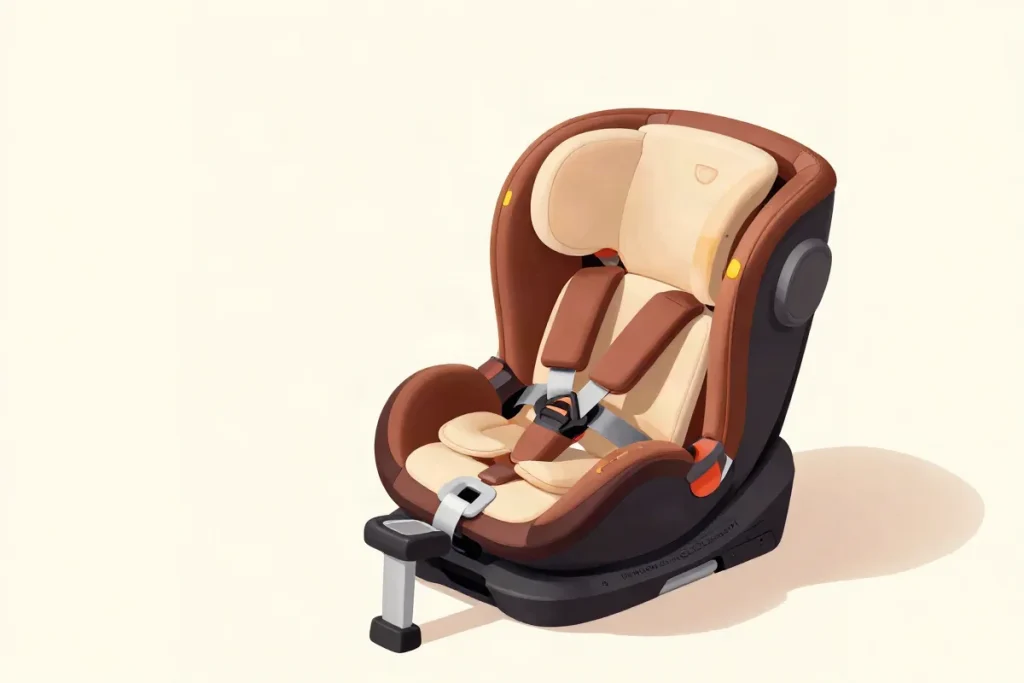
Which Car Seats Are Considered the Safest and Why?
The safest car seats are those that have passed rigorous crash tests according to the European standard ECE R129 (i-Size), in effect since 2013 and updated in 2026. This standard takes into account head and neck protection, as well as limiting the child’s movement during collisions. Among the safety leaders are the Cybex Sirona S and Britax Römer Dualfix models, which received top scores in independent ADAC tests in 2026.
Key safety features include side impact protection, five-point harnesses, and ISOFIX installation. For newborns, rear-facing seats are recommended, as they reduce neck strain in an accident.
- 90% reduction in head injury risk when using seats with side protection
- 15 kg maximum weight for the safest seats in group 0+/1
How to Choose a Car Seat by Child’s Age and Weight?
Selecting a car seat depends on the child’s age, height, and weight. In 2026, the classification by groups is generally accepted as follows:
- Group 0+ (0–13 kg): rear-facing seats for newborns, such as the Maxi-Cosi CabrioFix.
- Group 1 (9–18 kg): seats that can be installed facing forward or backward, for example, the Chicco Seat Up 012.
- Group 2/3 (15–36 kg): high-back boosters like the Graco Tranzitions.
Choosing by weight is more important than by age, as children grow at different rates. For example, for newborns weighing up to 13 kg, seats with a carrycot function and adjustable recline are preferable.
Which Car Seat Models Are Most Comfortable for Long Trips?
Comfort is related to ergonomics, adjustability, and materials. In 2026, the comfort leaders are the Maxi-Cosi Pearl Pro and Recaro Zero.1 Elite models, which offer multiple recline positions, ventilation, and soft upholstery. Seats with 360° rotation—like the Cybex Sirona S—greatly improve ease of seating and unloading the child.
For long journeys, important features include:
- Seat recline adjustable in at least three positions.
- Breathable fabrics that reduce sweating.
- Head support with side impact protection.
What Is the Difference Between ISOFIX and Seat Belts When Installing Car Seats?
ISOFIX is a car seat mounting standard that provides a rigid connection to the vehicle body via special metal anchors. In 2026, most new models come with ISOFIX, which significantly improves stability and reduces the risk of incorrect installation. For example, the Britax Römer Dualfix and Cybex Sirona S are equipped with ISOFIX anchors.
Seat belts used without ISOFIX are more prone to installation errors, which lowers protection effectiveness. However, seat belts remain suitable for older children and boosters, where ISOFIX is not always available.
| Criterion | ISOFIX | Seat Belts |
|---|---|---|
| Safety level | High, minimizes errors | Medium, depends on correct installation |
| Compatibility | Modern cars with ISOFIX | Suitable for all cars |
| Installation complexity | Simple, fast to secure | Requires skill, more complicated |
| Seat price | Often more expensive (from 15,000 ₽) | Cheaper (from 5,000 ₽) |
What Additional Features Influence Car Seat Choice?
Additional features can increase comfort and safety but also raise the price. In 2026, popular options include:
- Built-in correct installation indicator (e.g., Cybex Sirona S).
- Ventilation systems to prevent overheating.
- Removable and washable covers made of hypoallergenic materials.
- 360° seat rotation to simplify seating the child.
When choosing seats with extra features, parents should consider that prices for such models start at 15,000 ₽ and up, as with the Maxi-Cosi Pearl Pro.
Which Car Seats Are Best for Different Budgets?
In 2026, the market offers seats in various price ranges:
- Economy options — from 5,000 to 8,000 ₽. For example, Lorelli Saturn and Siger Art provide basic protection for children up to 18 kg but lack advanced features.
- Mid-range — 9,000–15,000 ₽. Britax Römer Advansafix IV S and Chicco Seat Up 012 offer a balance of safety and comfort.
- Premium class — from 15,000 ₽ and above. Cybex Sirona S and Maxi-Cosi Pearl Pro have advanced protection systems, comfort, and durability.
Frequently Asked Questions
Can a car seat be used without ISOFIX?
Until what age should a child ride in a car seat?
How often should a car seat be replaced?
Can a booster seat be used for infants?
Key Takeaways
- Car seats certified under ECE R129 (i-Size) provide maximum safety.
- Seat choice should be based on the child’s weight and age, not age alone.
- ISOFIX mounts are preferable for correct installation and improved safety.
- Comfort and additional features enhance the experience, especially on long trips.
- Budget options suit limited use, while premium seats offer the best safety and comfort.
In summary, choosing a car seat is a balance of safety, age, comfort, and budget. In 2026, the market offers models that meet high European standards and provide a wide range of features for all age groups, from newborns to teenagers.