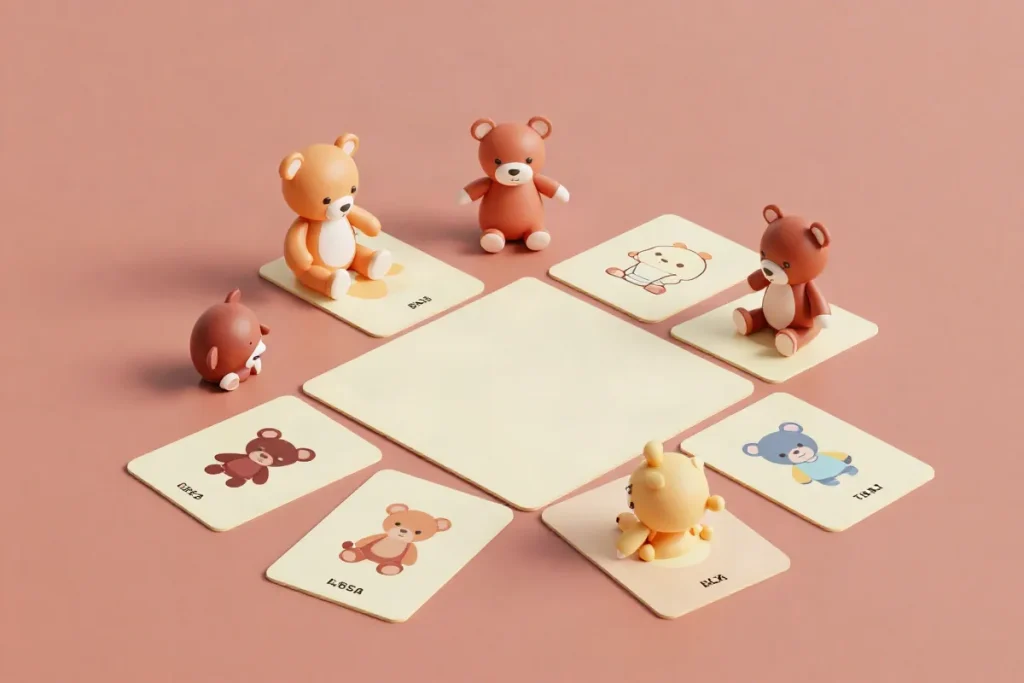
Introduction: Why Role-Playing Games Are Important for Toddlers Aged 2–3
Early development of social skills in children aged 2–3 is a crucial stage in personality formation and preparation for life in society. Role-playing games with assigned roles serve as an effective tool for teaching toddlers to share and communicate peacefully. In Russia, kindergarten teachers have actively incorporated such games into preschool education programs since 2026, following the standards of the Federal State Educational Standard for Preschool Education (FGOS DO).
Through these games, children learn to understand each other, negotiate, and fairly distribute roles, which helps build foundational moral principles and cooperation skills.
What Are Role-Playing Games with Assigned Roles?
Role-playing games involve each child receiving a specific role, performing it, and interacting with other participants. For toddlers aged 2–3, it is important that roles are simple and that there is an opportunity to switch roles during the game.
Main Characteristics
- Role distribution based on a simple scenario
- Short game episodes lasting no more than 10–15 minutes
- Possibility for spontaneous plot development
- Focus on communication and joint activity
For example, a popular 2026 methodological development from Moscow Pedagogical University offers the game «Store,» where children split into sellers and buyers, learning exchange, waiting their turn, and polite requests.
How Role-Playing Games Develop Sharing and Peaceful Communication Skills
During role-playing, children acquire the following abilities:
- Understanding fair distribution of toys and roles
- Skills to express requests and refusals in a playful manner
- Ability to listen and make decisions together with peers
- Development of tolerance and empathy
Research from the «Childhood Development» pedagogical center shows that 75% of toddlers regularly participating in role-playing games manage conflicts better than peers without such experience.
Methods and Examples of Thematic Role-Playing Games for Toddlers
In 2026, Russia widely uses the thematic role-playing methodology described in the «Card File of Thematic Role-Playing Games for Children Aged 2–7» by Infourok. The goal is to activate speech and develop role behavior skills.
Popular Games and Their Prices
- «Store» — toy and card set costs from 1200 ₽
- «Family» — doll and accessory set from 1500 ₽
- «Clinic» — set with toy medical instruments around 1300 ₽
These games promote speech development and interaction skills as children verbalize their roles and learn to listen to others.
| Game | Cost (₽) | Main Skills | Average Game Duration (min) |
|---|---|---|---|
| Store | 1200 | Exchange, requests, turn-taking | 15 |
| Family | 1500 | Role behavior, speech | 20 |
| Clinic | 1300 | Cooperation, empathy | 15 |
The Adult’s Role in Organizing Role-Playing Games
A teacher or parent should gently guide the game, help distribute roles, and support dialogue between children. It is important not to dictate the scenario but to create conditions for independent plot development.
Main Responsibilities of the Adult
- Explain the game rules and assist in role distribution
- Maintain balance among participants
- Help children resolve conflicts peacefully
- Encourage joint decision-making
In Russian kindergartens that comply with FGOS DO, the practice of using role-playing games with assigned roles has been implemented in 60% of educational programs since 2025.
Psychological Aspects and Impact on Child Development
Role-playing games contribute to the development of emotional intelligence, self-regulation skills, and communication abilities. Toddlers learn to recognize emotions, understand others’ perspectives, and express their own feelings.
According to research from the Ural State Pedagogical University, children aged 2–3 who actively participate in role-playing games show a 30% improvement in speech skills over six months.
Frequently Asked Questions
At what age is it best to start role-playing games with assigned roles?
Is it necessary to buy special kits for role-playing games?
How long should one play session last?
What if children don’t want to share toys?
Key Takeaways
- Role-playing games develop sharing and peaceful communication skills in toddlers aged 2–3.
- Assigning roles helps form social and moral principles.
- Regular participation in such games improves speech and emotional skills by 30–75%.
- Adults play a crucial role in organizing and supporting the play process.
- For effective results, games lasting 10–20 minutes with simple, understandable roles are recommended.
Conclusion
Role-playing games with assigned roles are not just entertainment for toddlers aged 2–3; they are an important part of their social development. They teach children to share, listen, and resolve conflicts through play, laying the foundation for future successful relationships within the family, peer groups, and society. Parents and educators should incorporate such games into daily practice, taking into account the age characteristics and interests of toddlers to build a strong foundation for harmonious child development.
Sources
- infourok.ru — «Card File of Thematic Role-Playing Games for Children Aged 2–7 — Infourok»
- razvitum.ru — «Methodological Development on ‘Thematic Role-Playing as a Means of Introducing Preschool Children to Social Reality in Accordance with FGOS DO’»
- elar.uspu.ru — «[PDF] Thematic Role-Playing Games as a Means of Speech Development in Children»
- poznyakova.com — «How Games with Rules Develop Children: A Scientific View and Practical Tips»
- Children’s Games for Ages 3 and 4 — «Google Play Apps»