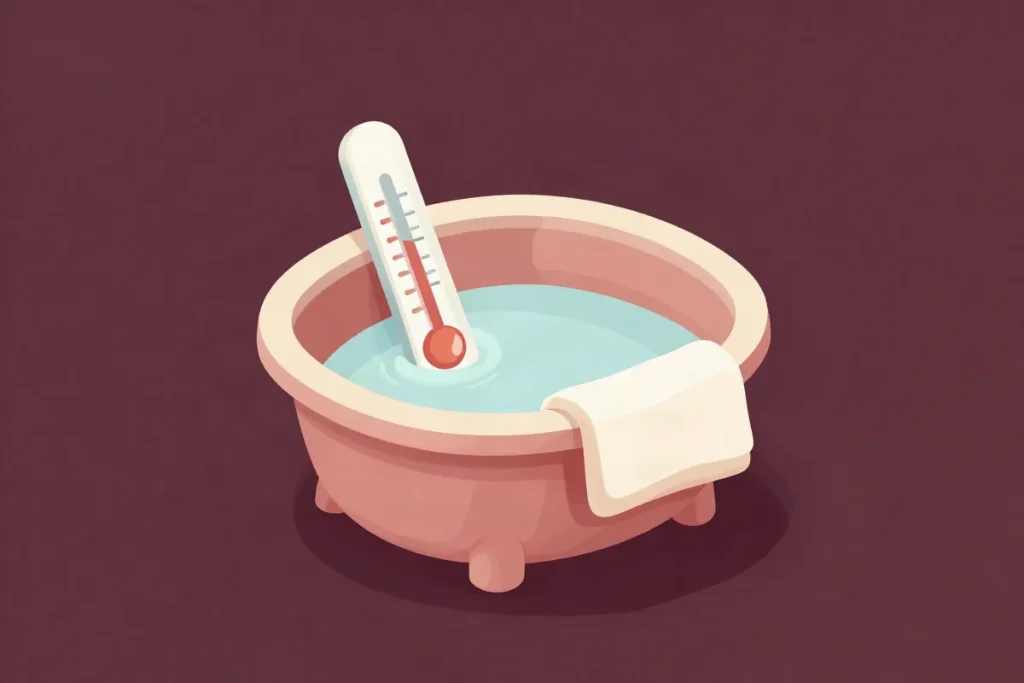
Safe bathing for a newborn is a short procedure that requires an adult’s constant supervision, a warm room, and water that feels comfortable for the baby. Prepare everything you need in advance, and never leave your baby alone in the water—not even for a second, even if it is very shallow.
Newborn care does not require complicated equipment, but it is important to follow a few simple safety measures. We explain how to prepare for bath time, what to keep in mind before and afterward, and how to make the experience more relaxing for your baby.
| What is measured | Range given | Note |
|---|---|---|
| Water | 36–37 °C | One of the guidelines given |
| Water | 37–37,5 °C | Also given for bathing |
| Room air | 21–24 °C | One of the ranges given |
| Room air | 22–24 °C | Another range given |
| Room for bathing | 24–26 °C | A separate recommendation |
- 36–37 °C One of the stated ranges for bathwater temperature
- 37–37,5 °C An alternative bathwater temperature guideline from the recommendations provided
- 22–24 °C One of the stated ranges for room temperature
- 24–26 °C Room temperature given in a separate recommendation for bathing at home
How should you prepare the water for the first bath?
For the first bath, use clean tap water and check with a bath thermometer that it is 36–37 °C. This method of measuring the temperature is specifically recommended for the first bath; if the tap water is clean, no additional treatment is needed.
The recommendations give two similar guidelines: 36–37 °C and 37–37,5 °C. This small difference is no reason to heat the water more: do not exceed 37,5 °C, and rely on the thermometer reading rather than how the water feels to your hand.
What should the room temperature be?
For a newborn’s bath, aim for an air temperature of 21–24 °C or 22–24 °C in the room. A warmer recommendation is also given—to heat the room to 24–26 °C. This is warmer than the 22–24 °C range, rather than an exact match.
How to prepare the bathing area
Bathe your baby in a quiet spot indoors; a sink or baby bathtub will work. Choose the location in advance and lay out a towel and anything you will need after the bath, so you do not have to look for them once your baby is in the water.
When and how often should you bathe a newborn?
Bathe your newborn when they are calm, alert, and fed, but not immediately after a feed. Choose how often to bathe based on the room temperature, the condition of your baby’s skin, and their reaction—not according to a universal schedule.
Room conditions matter when bathing: the recommendations provided give an air temperature range of 21 to 26 °C. Make sure your baby is comfortable, and do not start the bath if they are tired or unsettled.
How to choose how often to bathe
The material provided does not specify a single number of baths per week, so no particular schedule should be treated as the rule for all newborns. Take your baby’s skin and individual response into account: if bathing makes them anxious or their skin changes, adjust the frequency and ask a healthcare professional for advice.
How should you support your baby during a bath?
An adult should stay beside the tub throughout the bath and support the baby, never leaving them unattended. Before placing your baby in the water, put a towel nearby and get everything you need ready in advance. That way, you will not have to step away or let go of your baby, even briefly.
A stable baby bathtub or a suitable sink can be used for bathing. Before lowering your newborn into the water, check it with a thermometer: the recommendations give two similar guidelines—36–37 °C and 37–37,5 °C. Do not rely only on how the water feels to your hand; a thermometer lets you check the temperature before the bath begins.
How to support your baby and check the water
Support your baby throughout the bath while staying beside the tub, and keep the towel and other essentials within reach. If you need to step away or get something, take your baby out of the water first and wrap them in a towel. A bathtub or sink does not replace an adult’s constant support.
When should you postpone a bath, and what mistakes should you avoid?
It is best to postpone your newborn’s bath if you have not checked the water temperature with a thermometer, if it differs noticeably from the recommended ranges of 36–37 °C and 37–37,5 °C, if your baby has just eaten, or if an adult cannot stay beside them the whole time. These precautions help prevent bathing in unsuitable water and situations where a baby is left unattended.
What to check before the bath
- Water temperature: Measure it with a thermometer before placing your baby in the tub. If the reading is noticeably below 36 °C or above 37,5 °C, postpone the bath and check the water again.
- Time since feeding: Choose a time when your baby is fed and calm, but do not start the bath immediately after a feed.
- Supervision and supplies: Put a towel and everything else you need nearby in advance. Never leave your baby alone in the water, even briefly, and do not step away to fetch anything.
Bathing frequency should not be treated as a fixed rule: it depends on your baby’s skin, the room temperature, and their individual response. Pay attention to these signs rather than following a set schedule. If your baby’s skin reacts badly to bathing, take that into account when deciding how often to bathe them.
Frequently asked questions
What should the water temperature be when bathing a newborn?
Can you bathe a newborn in tap water?
How many times a week should you bathe an infant?
When is the best time to bathe a baby after feeding?
Key takeaways
- Check the water with a thermometer: the guidelines given are 36–37 °C and 37–37,5 °C.
- The air temperature ranges given are 21–24 °C, 22–24 °C, and 24–26 °C.
- Bathe your baby when they are calm, alert, and fed, but not immediately after a feed.
- Adjust bathing frequency to your baby’s skin and their response.
Sources
- mosfilters.ru — “Newborn Bathing: A Guide to Safe Bathing”
- naditok.ua — “How to Bathe Newborns Properly: What to Use and How Often”
- boobl-goom.ru — “How to Bathe Babies: Rules for Bathing a Newborn”
- me.health.gov.il — “Safe Bathing for a Child — Parents and Parenting”
- dgb8.ru — “A Baby’s First Bath: Tips from a Specialist”
