Introduction: Why Do 2–3-Year-Old Children Have Conflicts?
Children aged 2–3 often get into conflicts, which is related to their developmental stage. The main reasons are feelings of jealousy and limited understanding of social norms. It is important to recognize that these factors underlie conflict behavior in order to apply preventive methods in time. For example, research shows that about 60% of children this age struggle to control their emotions, leading to frequent quarrels.
In this article, we will examine the primary psychological causes of conflicts in young children and suggest proven play techniques that help toddlers develop skills for peaceful interaction.
Main Psychological Causes of Conflicts
Jealousy and the Need for Attention
At 2–3 years old, children begin to become aware of those around them and compare themselves with others. Jealousy arises when a toddler feels a lack of attention from parents or peers. This often occurs with the arrival of a new sibling or in daycare settings.
Limited Understanding of Social Norms
Children this age are just starting to learn behavioral rules and social norms. They are not yet able to fully control their impulses and often do not realize that certain actions can hurt others.
- Jealousy: appears in 55–65% of 2–3-year-olds when competing for attention.
- Unawareness of norms: 70% of toddlers do not yet understand the boundaries of acceptable social behavior.
| Cause | Occurrence Rate | Typical Manifestations |
|---|---|---|
| Jealousy | 55-65% | Shouting, crying, aggression toward other children |
| Unawareness of social norms | 70% | Ignoring requests, taking toys away |
The Role of Emotional Development and Communication
The inability to express feelings in words is a key cause of conflicts. At 2–3 years old, a child’s vocabulary is about 200–300 words, which is insufficient for complex emotional expression.
Teaching Empathy and Emotional Expression
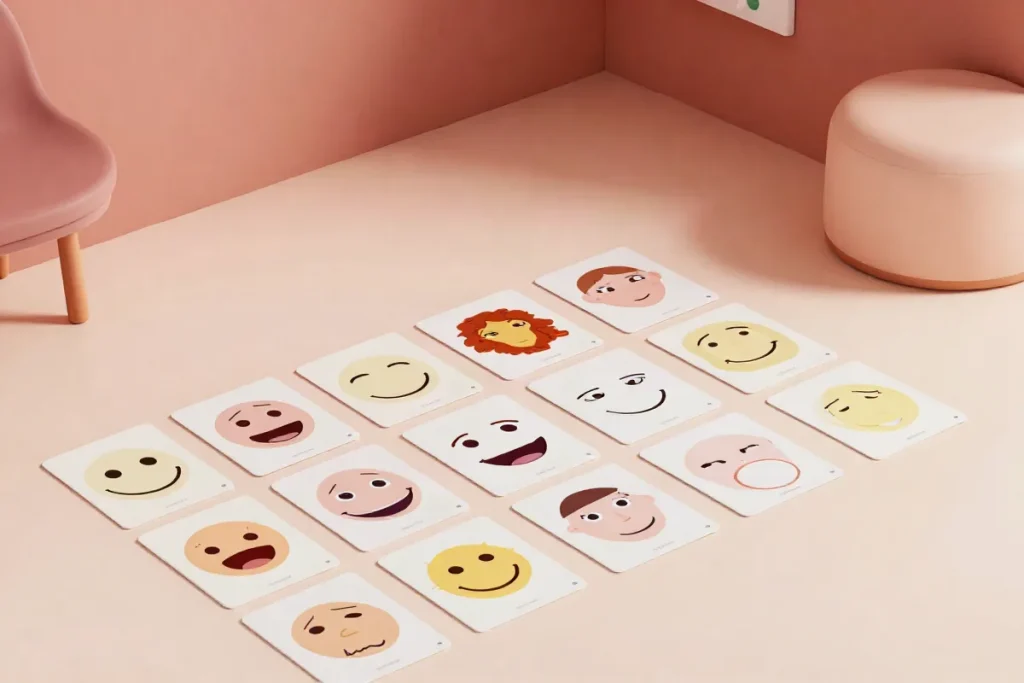
Games using dolls, emotion cards, and role-playing situations help children recognize and name their feelings. These activities promote empathy development and reduce aggressive behavior.
- Emotion cards from the company «Development» cost about 450 ₽ for a set of 30.
- The «Childhood World» puppet theater set costs 1200 ₽ for role-playing games.
The Importance of Consistent Routines and Positive Reinforcement
A stable daily routine reduces anxiety levels in toddlers, which lowers the likelihood of conflicts. Regular times for sleep, meals, and play create a sense of security.
Positive Reinforcement in Parenting
Praising a child for good behavior and explaining the consequences of bad behavior is a key parenting method. According to educators, positive reinforcement reduces conflicts among children by up to 30%.
- Example: using a sticker system for good behavior.
- The average price for a sticker set is about 300 ₽.
Play-Based Methods for Conflict Prevention
Role-Playing Games and Collaborative Tasks
Role-playing games teach children to interact and negotiate. Collaborative tasks develop cooperation and patience skills.
Exercises to Develop Communication Skills
Games where a child learns to listen and share help build social skills. For example, the game «Pass the Toy» teaches waiting for one’s turn and respecting others’ wishes.
| Method | Description | Cost (rub.) |
|---|---|---|
| Emotion Cards | Recognizing and naming emotions | 450 |
| Puppet Theater | Role-playing with dolls | 1200 |
| Behavior Stickers | Positive reinforcement | 300 |
- 60% of 2–3-year-olds have difficulty controlling emotions
- 70% of toddlers lack full understanding of social norms
- 30% reduction in conflicts with positive reinforcement
Frequently Asked Questions
How can I tell if my child is feeling jealous?
Which games are best for teaching emotions?
How long should play-based communication training last?
How do I reinforce positive behavior in my toddler?
Key Takeaways
- Jealousy and lack of understanding of social norms are the main causes of conflicts in 2–3-year-olds.
- Developing empathy skills through play reduces aggressive behavior.
- A consistent routine lowers anxiety and conflict levels.
- Positive reinforcement effectively decreases the number of conflicts.
- Play-based methods are the best way to foster peaceful interaction skills in toddlers.
Conclusion
Conflicts among 2–3-year-olds are a natural phenomenon linked to their psychological development. Recognizing causes such as jealousy and limited social experience allows parents to apply effective prevention methods. Games aimed at developing empathy, positive reinforcement, and a clear daily routine create conditions for a child to build peaceful interaction skills. Ultimately, this helps the toddler successfully form relationships with others and reduces conflict situations within the family and peer groups.
Sources
- Civil, Criminal & More — «Search Court Records in Louisiana»
- courtcasefinder.com — «Instant Court Case Lookup — CourtCaseFinder.com»
- UniCourt — «U.S. District Courts Records | PACER Case Search»
- fifthcircuit.org — «Fifth Circuit Court of Appeal — State of Louisiana»