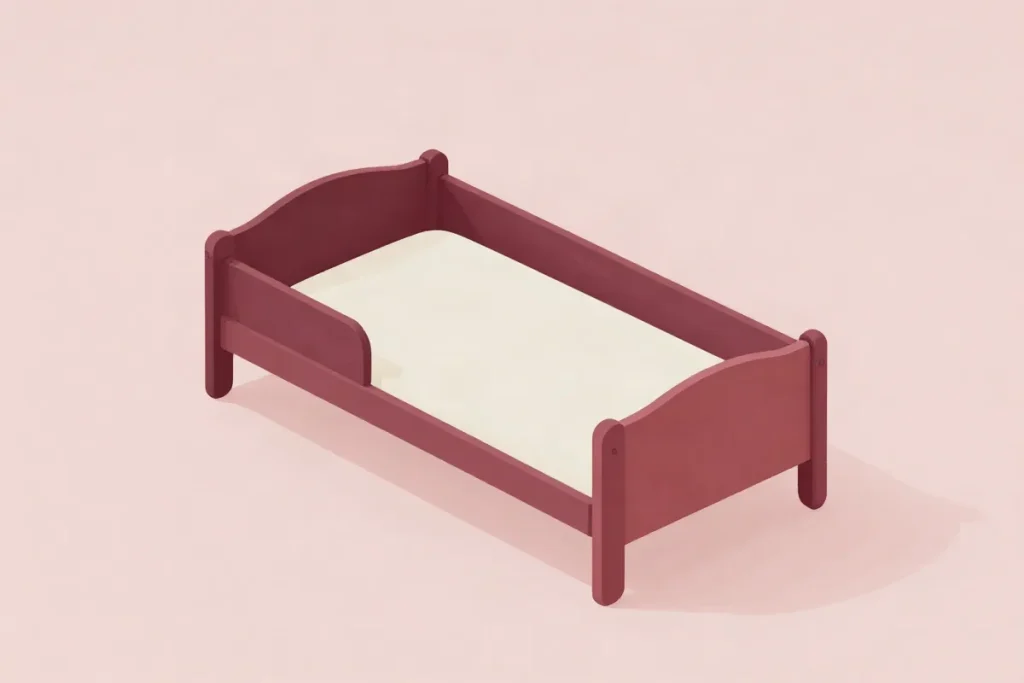
Choosing children’s furniture should be based on three key criteria: safety, comfort, and durability. Only by combining these factors can you create a convenient and reliable space for your child that supports healthy development and an active lifestyle.
Safety is the top priority for any furniture in a child’s room. Materials must be eco-friendly and hypoallergenic, and the construction should be stable and free of sharp edges. Comfort comes from the correct anatomical shape of items, which supports proper posture and creates a cozy atmosphere for play and rest.
Moreover, durability is important not only economically but also to ensure the furniture withstands daily use and retains its appearance despite active wear. In this article, we will explore how to make the right choice in children’s furniture, considering all these aspects to provide a safe and comfortable space for years to come.
| Material | Safety (VOC emission) | Durability (load, kg) | Average price (₽) |
|---|---|---|---|
| Birch solid wood | Low (class E1) | Up to 80 kg | 12 000–18 000 |
| E1-grade laminated chipboard (LDPB) | Low (class E1) | Up to 50 kg | 7 000–12 000 |
| Powder-coated metal | Safe when coated | Up to 100 kg | 8 000–15 000 |
| PVC film | High VOC emission | Low | 5 000–10 000 |
- 0.1 mg/m³ Maximum formaldehyde level in E1-class materials
- 58–62 cm Recommended desk height for children aged 6–12 years
- 20 cm Minimum height of bed rails on children’s beds
- 12 000 ₽ Starting price for a birch solid wood bed
What safety standards must children’s furniture comply with?
GOST regulations and sanitary norms
Children’s furniture in Russia must meet the mandatory safety standard GOST R 52146-2003, which governs requirements for materials and product construction. Key parameters include a maximum formaldehyde emission level not exceeding class E1, corresponding to a concentration no higher than 0.1 mg/m³. This limit is crucial to prevent toxic effects on the child’s health.
Additionally, GOST requires mandatory testing of furniture for stability against tipping—tests lasting at least 24 hours—to ensure pieces do not overturn during normal use. Another important requirement is the use of non-toxic dyes and the absence of sharp corners with a radius less than 3 mm, reducing the risk of injury when children come into contact with furniture.
- Formaldehyde level no higher than class E1 (0.1 mg/m³);
- Tipping stability tests lasting no less than 24 hours;
- Corner radius of at least 3 mm;
- Use of non-toxic dyes;
- Compliance with GOST R 52146-2003.
Which furniture materials are safe and durable for children?
Wood and synthetic materials
For children’s furniture, birch or pine solid wood, as well as E1-class laminated chipboard (LDPB) at least 16 mm thick, are considered safe and durable. Solid wood shelves can support up to 80 kg, and beds made from it generally cost between 12 000 and 18 000 ₽. LDPB is a more affordable option; for example, E1-class LDPB wardrobes can be found starting at 7 000 ₽.
When choosing furniture, pay attention to metal parts: they should have a powder coating that protects against corrosion and eliminates toxicity. Avoid furniture with PVC film finishes, as they can emit harmful substances unsafe for children.
- Birch or pine solid wood: shelf strength up to 80 kg, bed price 12 000–18 000 ₽;
- E1-class LDPB at least 16 mm thick: safe material, wardrobe price from 7 000 ₽;
- Metal components with powder coating – protection against corrosion and toxicity;
- Avoid furniture with PVC film due to the risk of harmful emissions.
How to ensure ergonomics and comfort when choosing children’s furniture?
Height, adjustability, and safety
Optimal ergonomics for children’s furniture is achieved by considering the child’s height, the possibility of adjustments, and compliance with safety standards. For children aged 6–12 years, a desk height of 58–62 cm is recommended, which reduces back strain and improves posture according to the Institute of Ergonomics of the Russian Academy of Sciences. The Comf-Pro Kids chair, with adjustable backrest and seat height from 30 to 45 cm, allows customization to the child’s individual measurements, supporting proper body positioning.
Key selection criteria
- Desk height: 58–62 cm for children aged 6–12 years.
- Chair adjustability: seat height 30–45 cm, adjustable backrest (Comf-Pro Kids model).
- Beds with rails at least 20 cm high to prevent nighttime falls.
- Furniture with smoothly rounded edges, reducing injuries by an average of 25%.
Safety is enhanced by beds with rails at least 20 cm high, which effectively prevent children from falling during the night. Additionally, furniture with rounded edges reduces the risk of injury from accidental bumps, which is especially important for active toddlers. When buying furniture in 2026, pay attention to models that meet these criteria to ensure your child’s comfort and protection for years ahead.
What factors influence furniture choice regarding a child’s health?
The impact of materials and construction on health
Choosing children’s furniture with the child’s health in mind primarily depends on safe materials and ergonomic design, which reduce the risks of allergies and musculoskeletal problems. Furniture made from materials with low volatile organic compound (VOC) emissions, in particular, lowers the likelihood of allergic reactions and asthma in children.
For example, children’s furniture models with antibacterial coatings and lacquers certified according to EN 71-3 are recommended for kids with allergies. This not only protects against harmful chemicals but also prevents bacterial growth on surfaces. Moreover, furniture correctly matched to the child’s height and backrest shape promotes proper posture formation, reducing the risk of scoliosis in schoolchildren by about 15%.
- Materials with VOC emission levels no higher than 0.1 mg/m³, such as furniture by «Detskaya Komfort»;
- Antibacterial coatings certified to EN 71-3 for «Malyshok» and «Junior» models;
- Optimal tabletop height from 60 to 75 cm, featured in «Rastishka» models;
- Regular wet cleaning of natural furniture reduces dust allergens in the child’s room by 40%.
What common mistakes are made when buying children’s furniture and how to avoid them?
Common mistakes when buying children’s furniture include purchasing uncertified products, choosing inappropriate sizes, and using models with sharp corners or unstable construction, which increase the risk of injury and discomfort. Avoid these issues by checking for GOST R compliance certificates and sanitary-epidemiological conclusions, and selecting furniture adapted to the child’s age and height.
Typical mistakes and warnings
- Lack of safety certificates. Furniture without certificates may contain toxic VOCs and formaldehyde concentrations above 0.1 mg/m³, which is hazardous to the child’s respiratory system.
- Wrong size. Desk height for children aged 3–5 should be 50–60 cm; otherwise, posture suffers and discomfort arises. Too low furniture encourages slouching; too high causes shoulder tension.
- Sharp corners and instability. Furniture with sharp edges, for example IKEA’s KURA series, requires protective covers; unstable wardrobes and chairs without anti-tip anchors increase fall and injury risk.
- Ignoring eco-friendliness of materials. Natural solid wood and certified LDPB with emissions below permissible levels cost from 10 000 ₽ per set and reduce allergy and respiratory problems.
What is the cost of quality children’s furniture and where is it best to buy?
Prices and stores
Quality children’s furniture costs from 12 000 ₽ for a wooden birch solid wood bed, while IKEA models like KURA start at 14 000 ₽. Ergonomic and safety-compliant sets at Hoff stores range from 20 000 to 40 000 ₽, offering a more comprehensive solution for the child’s room.
When choosing where to buy, consider the following:
- Wooden birch solid wood beds — from 12 000 ₽, ensuring strength and durability.
- IKEA models (e.g., KURA) — from 14 000 ₽, combining a well-known brand with affordable prices.
- Furniture sets at Hoff — 20 000 to 40 000 ₽, accounting for ergonomics and safety.
- Online platforms Wildberries and Ozon — quality certificates and customer reviews help make informed choices.
- Specialized children’s furniture stores — guarantee compliance with GOST and verified safety.
When selecting furniture, consider not only the price but also the presence of quality certificates and the ability to verify compliance with Russian standards at specialized stores. Online platforms offer convenience and reviews, though GOST compliance checks are more often conducted offline.
Frequently Asked Questions
How to check children’s furniture safety before buying?
Which materials are best for a children’s room with allergy sufferers?
What is the price of a quality solid wood children’s bed?
What desk height is suitable for an 8-year-old child?
Key Takeaways
- GOST R 52146-2003 regulates children’s furniture safety in Russia
- E1-class materials are safe regarding formaldehyde content
- Optimal children’s desk height is 58–62 cm for schoolchildren
- Birch and pine solid wood are strong and eco-friendly materials
- Check for certificates and avoid sharp corners