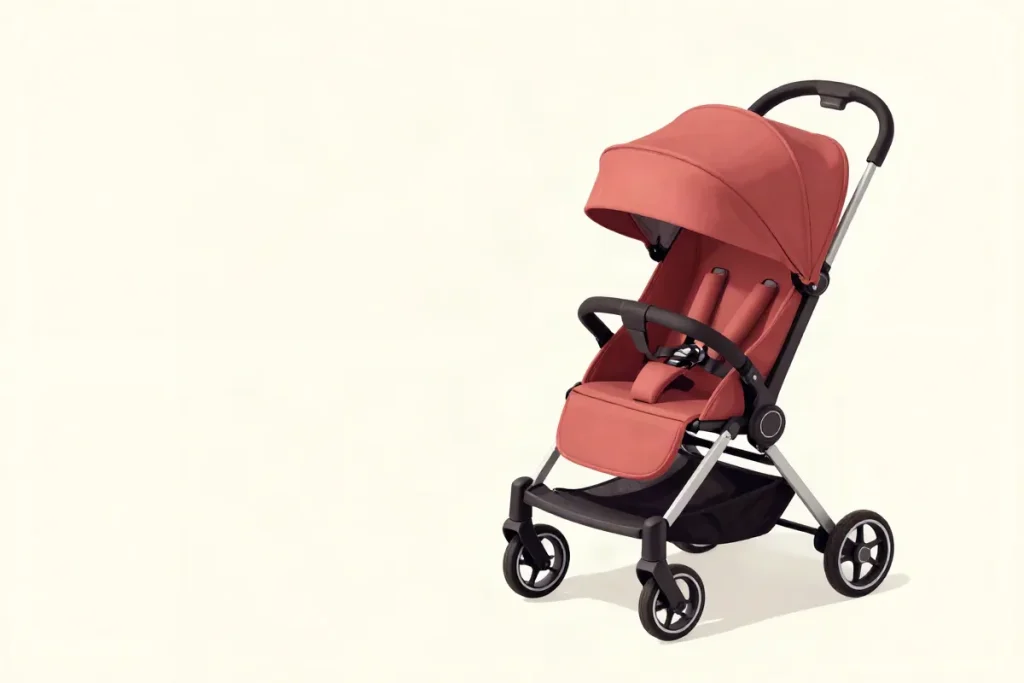
When choosing a baby stroller, the primary criterion should be the child’s safety, ensuring protection from injuries and convenience for parents. Comfort for the child and the stroller’s durability are also important so that it lasts long and performs well under various conditions.
Today’s market offers many stroller models that vary in features, design, and price, making the choice more difficult for new parents. Understanding key criteria such as safety, comfort, and reliability will help make an informed decision and provide the child with comfortable outings, while ensuring convenience and peace of mind for parents.
In this article, we will thoroughly explore what to pay attention to when purchasing a baby stroller in 2026, so it meets the highest standards and lives up to the family’s expectations in everyday use.
| Stroller Type | Weight, kg | Price, ₽ | Safety | Comfort |
|---|---|---|---|---|
| Lightweight Stroller | 7–10 | 20,000–45,000 | Five-point harness, brakes | Backrest adjustment up to 170° |
| Classic Bassinet | 9–13 | 25,000–50,000 | Stability, suspension | Flat sleeping position |
| Transformer | 10–15 | 40,000–70,000 | Harnesses, brakes, certifications | Multifunctional, adjustable elements |
| Modular | 12–16 | 50,000–90,000 | High level of safety | Additional accessories, suspension |
- 22 kg maximum load according to GOST R 55575-2013
- 170° maximum backrest tilt angle for comfortable sleep
- 5 years frame warranty from Peg Perego
- 7–10 kg optimal weight for a lightweight stroller
What Safety Standards Must Baby Strollers Meet in Russia?
Russian Standards
In Russia, baby strollers must comply with safety requirements established by the GOST R 55575-2013 standard, effective since 2013. This regulation specifies the maximum allowable load on the stroller structure, which must not exceed 22 kg, thus ensuring reliability and safe use for infants.
Additionally, the standard mandates stability testing: the stroller must not tip over when the frame is tilted up to 15°, which guarantees the child’s protection from accidental falls and injuries.
Mandatory Safety Features
According to GOST, all baby strollers must have five-point safety harnesses that securely hold the child in the seat, preventing falls and providing comfort during movement. Another mandatory requirement is the presence of a braking system that reliably holds the stroller in place.
- Five-point safety harness — essential for securing the child;
- Braking system — ensures stroller stability when stopped, as exemplified by the Cam Cortina X3 model, starting at 45,000 ₽;
- Maximum load — up to 22 kg according to GOST R 55575-2013;
- Stability at 15° tilt — mandatory safety test.
How to Assess a Child’s Comfort When Choosing a Stroller?
You can assess the child’s comfort by paying attention to seat width, backrest adjustability, and suspension quality — these parameters directly affect the child’s convenience and safety during outings.
Dimensions and Adjustments
Comfortable stroller seats range from 32 to 38 cm wide, providing ample space for the child. For example, the Baby Jogger City Mini GT2 has a seat width of about 35 cm and costs starting at 42,000 ₽. Backrest adjustment is also important — an optimal tilt angle up to 170° allows the child to rest and sleep comfortably. The Peg Perego Book Plus model, priced around 50,000 ₽, offers a smoothly adjustable backrest.
Materials and Suspension
Breathable, hypoallergenic fabrics are important for the child’s comfort, minimizing irritation and ensuring good ventilation; strollers from Cybex use such materials. Wheel suspension reduces vibrations when moving over rough surfaces — the presence of springs or independent suspension is especially valued. For instance, the Stokke Xplory model is equipped with adjustable suspension, allowing adaptation to different road types.
- Seat width: 32–38 cm (Baby Jogger City Mini GT2 — from 42,000 ₽)
- Backrest tilt: up to 170° (Peg Perego Book Plus — from 50,000 ₽)
- Suspension: springs or independent suspension (Stokke Xplory with adjustable suspension)
- Materials: breathable, hypoallergenic fabrics (Cybex)
Which Parameters Affect the Durability of a Stroller?
Materials and Construction
The durability of a stroller largely depends on the frame material and type of wheels. Aluminum frames are lighter and resistant to corrosion, as seen in the Baby Design Husky model with an aluminum frame. Steel frames are stronger but heavier and may rust if not properly maintained. Polyurethane wheels are preferable because they are more wear-resistant than rubber and can last up to 10,000 km.
- Baby Design Husky frame — aluminum, corrosion-resistant and lighter than steel
- Polyurethane wheels — service life up to 10,000 km
- Steel frame — increased strength but prone to rust
Warranties and Repairability
The warranty period on major components affects the longevity of use. For popular brands, it ranges from 2 to 5 years; for example, Peg Perego offers a 5-year warranty on the frame. Folding and locking mechanisms should be simple and reliable to minimize breakdowns. The Inglesina Aptica model uses a proven «book» folding mechanism known for reliability and ease of use.
- Peg Perego frame warranty — 5 years
- Average warranty period for popular brands — 2 to 5 years
- Inglesina Aptica «book» folding mechanism — reliability and simplicity
Which Additional Features Should You Consider and How Do They Affect Price?
Multifunctionality
The ability to transform a baby stroller into a car seat or bassinet significantly increases its cost, adding at least 10,000 ₽ to the base price. For example, the Chicco Trio Activ3 model starts at 55,000 ₽ and offers this functionality, which is convenient for travel and newborns. Swivel wheels and foldable handles improve maneuverability but make the stroller more expensive: the Cybex Priam with these options costs from 75,000 ₽. These features are especially important for parents who value compactness and convenience in urban environments.
Accessories and Package Contents
Most mid-range models (from 20,000 ₽) come equipped with a rain cover and mosquito net, which enhance practicality and comfort for walks in any weather. Additional accessories — cup holders, bags, footrests — make using the stroller more convenient but increase the price by about 5–15%. When choosing, it is important to consider which options are included in the basic package and which require extra payment to accurately assess the final cost and convenience.
- Transformation into car seat or bassinet — surcharge from 10,000 ₽;
- Rain cover and mosquito net — standard for models from 20,000 ₽;
- Swivel wheels and foldable handles — price from 75,000 ₽ (example Cybex Priam);
- Additional accessories increase price by 5–15%.
When Are Expensive Stroller Features Unjustified and What Are Common Buyer Mistakes?
Overloading with Features
Expensive stroller features become unjustified when living in a city with smooth, paved roads and no off-road conditions. For example, using a heavy model with full suspension, weighing over 14 kg, significantly complicates transportation in the city and does not bring noticeable comfort to the child. Additionally, excessive accessories such as rain covers, mosquito nets, and extra insulation increase the stroller price often by 10–15 thousand rubles without substantially improving conditions for the child.
For urban conditions, it is more reasonable to choose models lighter than 10 kg with basic suspension, such as the popular «Yoya Plus 4» stroller weighing about 7 kg and priced around 12,000 rubles, which provides comfort and convenience without excessive costs.
Buying Mistakes
Common buyer mistakes include choosing the wrong stroller size and ignoring warranty conditions. A stroller that is too wide does not fit in public transport, while one that is too narrow is inconvenient for walks, especially if the width exceeds 60 cm or is less than 45 cm. This limits family mobility and causes stress when using it. Furthermore, purchasing without considering service support and a warranty period of less than one year often leads to high repair costs — sometimes up to 30% of the stroller’s price.
- Optimal chassis width for an urban stroller — 45–60 cm;
- Minimum warranty period — 12 months;
- Stroller weight for the city — no more than 10 kg;
- Accessory cost should not exceed 20% of the stroller price.
Frequently Asked Questions
What is the optimal stroller weight for city walks?
Is it necessary to buy a stroller with suspension on all wheels?
Which materials are best for a stroller to ensure long service life?
How can I verify if a stroller meets Russian safety standards?
Key Takeaways
- Safety is regulated by GOST R 55575-2013 with a permissible load up to 22 kg
- Comfort is ensured by seat widths of 32–38 cm and backrest adjustment up to 170°
- Durability depends on frame material and wheel quality — aluminum and polyurethane are preferable
- Additional features increase price by 5-20%, but are not always necessary
- Common mistakes include choosing models that are too heavy or overly equipped