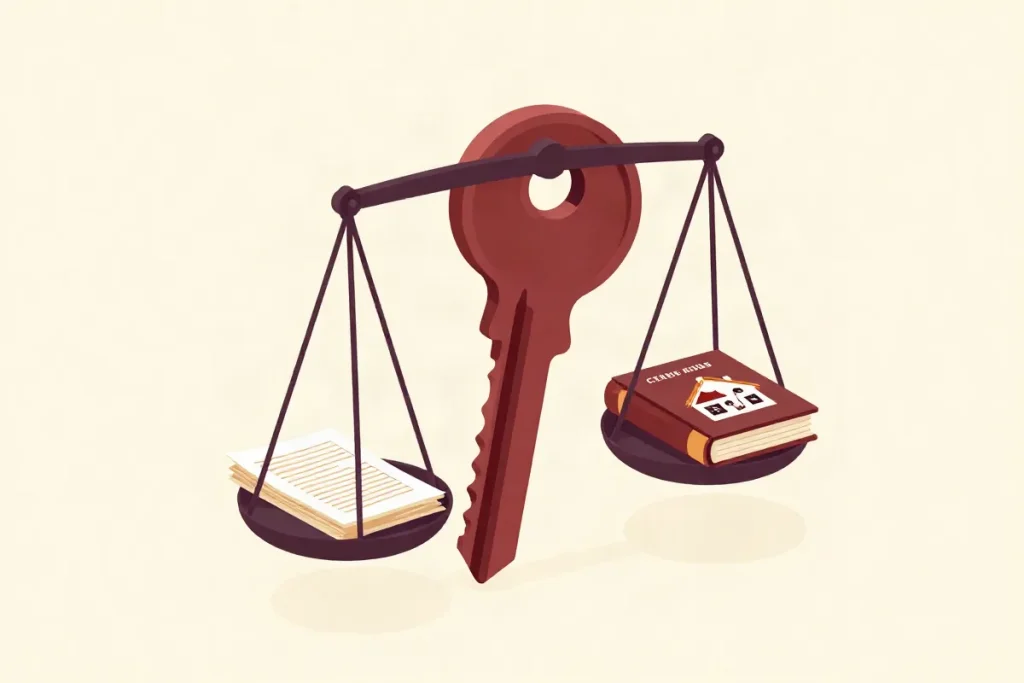
Before selling the family home, compare selling it with renting it out and other ways of using it.
This will help you assess not only the potential price but also the costs, responsibilities, and significance of the home to your family. The decision depends on the property’s condition, your relatives’ plans, and whether you’re willing to keep looking after it.
| Option | What to compare | What to check |
|---|---|---|
| Sell the entire home | Asking price and upkeep costs | Who owns the home and whether the owners agree |
| Sell a share to a relative | Proposed price for the share | The parties’ rights and the terms of the deal |
| Sell a share on the open market | Price and buyers’ genuine interest | The process for notifying the other owners |
| Rent it out | Potential income and upkeep costs | The home’s condition and who will manage it |
- April 23, 2026 release date of the film “The Family Home” in Russia
Why can’t you assess a family home by its sale price alone?
You can’t assess a family home by its sale price alone: the decision also depends on upkeep costs, potential rental income, who owns the home, and who has the right to decide what happens to it. The word “family” points to an emotional connection, but it does not establish ownership in itself.
The film “The Family Home” shows how loved ones’ wishes can differ: Dasha wants to sell the house in the country, while Misha is against it. The film was released in Russia on April 23, 2026. This conflict in the story highlights the emotional side of the decision, but it does not offer a ready-made answer for a real family.
What to compare before deciding
- Sale price. Find out how much you could get for the home.
- Upkeep costs. Factor in the payments and work needed to maintain the home.
- Potential rental income. Compare rental income with upkeep costs.
- Owners’ positions. Find out who owns the home and who needs to be involved in the decision.
These options address different questions: selling brings in money for the home, renting it out may generate income, and keeping it means paying ongoing costs. First, clarify the owners’ rights; then compare the sale price, upkeep costs, and rental income to see which option works for the family.
How do you compare selling, upkeep, and potential rental income?
Compare selling, upkeep, and potential rental income over the same period: use a realistic offer, documented expenses, and an estimate of rental income after checking the home’s condition and management costs.
What to include in your calculations
For a sale, write down the amount a buyer is actually willing to pay, not the price the family hopes to get. If there is a specific offer, use it; otherwise, ask potential buyers what they would pay. Don’t substitute a hoped-for amount for a real offer.
Gather records of current upkeep costs. Receipts, bills, and contracts will show what is being paid for and how much; memories of past expenses may not reflect changing circumstances.
- Sale: the amount of a real offer from a buyer.
- Upkeep: payments documented by receipts, bills, and contracts.
- Rental income: expected income after upkeep and management costs are deducted.
Assess all three options over the same period of time. Rent cannot be counted as net income until you deduct the costs of maintaining the home and the work involved in renting it out.
Who will look after the home?
The possibility of renting out the home depends on its current condition: first, check whether it is ready to live in without needing repairs. Then decide who will communicate with tenants, monitor payments, and arrange repairs if needed.
If a family member will manage the home, discuss in advance who will take on these tasks. If no one is available, factor in the cost of hiring help; otherwise, your comparison won’t account for all the work involved in renting it out.
What should you check about the owners’ shares before selling?
Before selling, use the documents to find out who owns the home and the shares, exactly what is to be sold, and whether the other owners have been notified as required.
Being related does not automatically confer ownership. First, compare the home’s title documents with the ownership records: family agreements alone do not determine who owns the property or a share of it.
A share or the entire home
- Selling a share to a relative. This is a separate option if the owner offers to sell their share to someone in the family. Before discussing the price, confirm exactly what share the seller owns.
- Selling a share on the open market. If the buyer is not a relative, the process for notifying the other owners matters. Check the procedure and the required documents for your specific circumstances before making a deal.
- Selling the entire home. This is not the same as one owner selling their share. Clarify whether the whole home is being discussed and whose rights would be affected by the agreement.
Before negotiations, define the subject of the deal precisely: a particular owner’s share or the entire home. If you’re considering selling a share on the open market, separately check the process for notifying co-owners and the required documents; it’s best to verify the details for your situation before signing an agreement.
How can you reach an agreement with relatives without putting pressure on them?
You can reach an agreement with relatives by discussing the money and the significance of the family home separately, then comparing the options on equal terms.
Start by discussing the numbers: give every owner the same sale price, upkeep costs, and terms for a potential rental. If estimates or calculations differ, give everyone time to check them against the documents rather than demanding an immediate answer.
Discuss separately what the home means to each person. Memories may explain someone’s attachment, but they should not become an argument that outweighs another person’s share or right to take part in the decision.
Options to discuss together
- Sell the entire home: discuss a price and sales process that all the owners understand.
- Rent it out: compare the rental terms and upkeep costs in advance.
- Have a relative buy a share: consider this if it works for the owners; check the price and payment terms.
Write down these options and give everyone the same information. That way, the discussion won’t depend on who first heard a particular price or rental terms.
If there is a dispute over ownership rights, don’t rely on family agreements in place of checking the documents: ask a real estate transaction specialist about the process. Every owner should have the opportunity to review the calculations and documents without pressure before making a decision.
When won’t selling solve the problem?
Selling won’t solve the problem if a share can’t be sold on acceptable terms or if issues involving the home and its occupants remain unresolved after the sale.
What could change the decision
- Money is needed urgently. An owner could offer their share to a relative or look for a buyer on the open market. When selling a share, it’s important to follow the process for notifying the other owners; before starting the sale, find out who needs to be notified and how.
- The buyer is offering unacceptable terms. Selling a share does not guarantee that you’ll find a buyer willing to pay the expected price. Set out the price and terms of the deal separately: who is selling the share, to whom, and on what terms.
- Renting is being considered. Renting out the home does not remove the question of who is responsible for its condition. Before looking for tenants, agree on who will handle day-to-day issues, monitor the home’s condition, and communicate with tenants.
A relative’s verbal promise to buy a share or agree on a price later is no substitute for checking ownership rights and the terms of the deal. Don’t sign documents under pressure: first clarify who owns the shares, how the sale will be carried out, and what obligations each party will take on.
If the terms are still unclear, put off signing and check the ownership documents, the price, and the process for transferring the share.
Frequently asked questions
Can I sell my share in the family home?
What should I compare before selling a home?
How should I take relatives’ objections to selling into account?
What should I do if I need money urgently?
Sources
- arenda.yandex.ru — “Can you sell a share in an inherited apartment without”
- articles.familysearch.org — “Who can view materials uploaded to Memories”
- papers.ssrn.com — “promissory estoppel. Failure to fulfill a promise to bequeath — SSRN”
- davidgraeber.org — “About "Lost People". The Silence of the Ancestors — David Graeber”
- chtv.ru — “Honoré de Balzac. The Nucingen Banking House, 1837 — CHTIVO”