Updated: August 26, 2026
Developing emotional intelligence in children has become an important task for parents and educators in 2026. Emotional intelligence plays a key role in forming social skills, the ability to empathize, and effectively interact with others. But how can we choose the perfect activities for developing emotional intelligence in children to ensure they are not only beneficial but also engaging?
There are many approaches and methods that can assist in this process. It is important to consider the child’s age, interests, and needs to make the activities as effective as possible. In our article, we will examine which activities contribute to the development of emotional intelligence and how they can be integrated into your child’s daily life.
What is Emotional Intelligence?
Emotional intelligence is the ability to recognize, understand, and manage one’s own emotions as well as the emotions of others. It includes components such as self-awareness, self-regulation, empathy, and social skills. For children, the development of emotional intelligence is particularly significant as it helps them not only to cope better with their own emotions but also to interact effectively with those around them.
The importance of emotional intelligence for children cannot be overstated. In today’s world, where communication and collaboration skills are highly valued, having a developed emotional intelligence becomes a true advantage. Children with a high level of emotional intelligence find it easier to connect with peers, handle conflicts more effectively, and recognize their own feelings and those of others. This, in turn, contributes to the formation of healthy relationships and boosts self-esteem.
Emotional intelligence also plays a crucial role in children’s socialization. The ability to understand and interpret other people’s emotions helps children adapt more successfully in groups, whether at school or in other social settings. For example, children with developed empathy skills can better support their friends in difficult times, strengthening friendships and creating an atmosphere of trust. Furthermore, such skills reduce levels of aggression and conflict, making interactions more harmonious and productive.
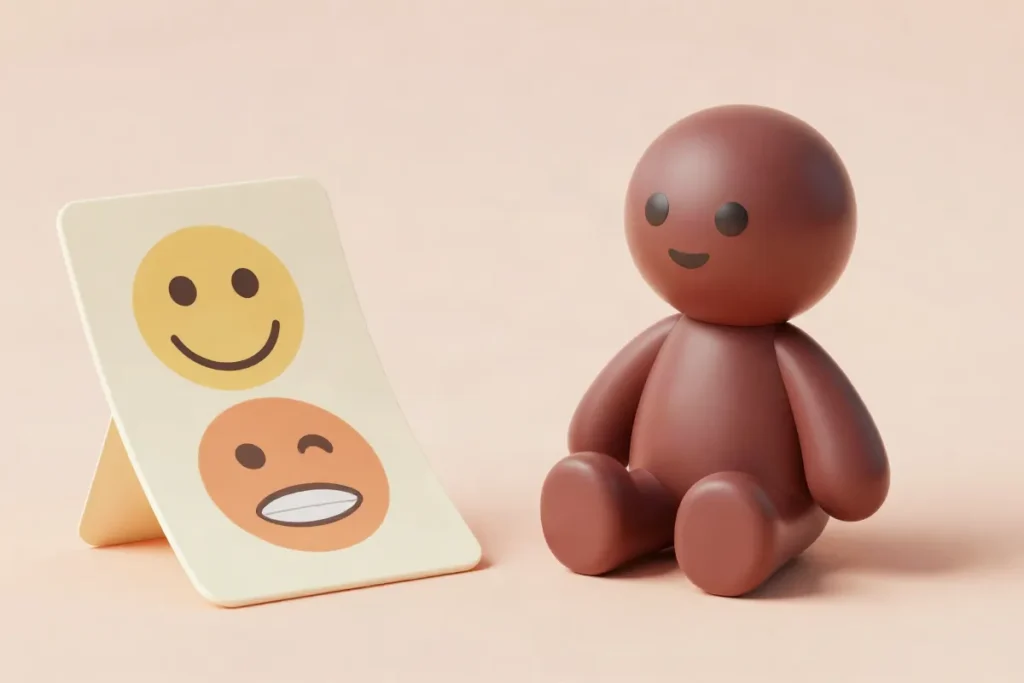
To develop emotional intelligence in children, parents and educators can use various methods and games. For instance, emotional dolls and cards, role-playing games, and pictograms depicting different emotions are excellent tools for teaching. These activities not only make the learning process enjoyable but also help children better recognize and express their feelings.
Games with Emotional Dolls
Games with emotional dolls are an engaging and effective way to develop emotional intelligence in children. These dolls, with their diverse facial expressions and characteristics, help children learn to recognize and express their feelings as well as understand the emotions of others. By using these dolls in play, various scenarios can be created where children can act out situations involving joy, sadness, anger, or fear. This not only enhances their emotional awareness but also promotes the development of empathy skills.
For playing with emotional dolls, various roles and scenarios can be suggested. For example, children can reenact a scene where one character loses a favorite toy while another tries to comfort them. Alternatively, a situation can be created where the dolls are preparing for a celebration, and each character expresses their feelings about the preparations—from excitement to joy. These scenarios can be either pre-prepared or improvised, making the game even more engaging and educational.
The benefits of using emotional dolls in games extend beyond developing emotional intelligence; they also improve social skills. Children learn to interact with each other, discuss their feelings, and find compromises. Emotional dolls become a bridge for communication, allowing children to explore their emotions in a safe and supportive environment. As a result, they become more self-confident and sensitive to the emotions of others.
In conclusion, games with emotional dolls are a powerful tool for fostering emotional intelligence in children. They promote the development of essential skills such as understanding and expressing one’s feelings, as well as the ability to empathize with others. By using these dolls in play activities, parents and educators can create a favorable atmosphere for children’s emotional growth and development.
Emotion Cards
Emotion cards are a wonderful tool for developing emotional intelligence in children. There are many different types of such cards, each of which can be used for various play and educational purposes. Typically, the cards depict faces with expressions of various emotions: joy, sadness, anger, surprise, and many others. These images help children not only recognize emotions but also understand their significance in different contexts.
One popular way to use the cards is in the game “Guess the Emotion.” In this game, one player selects a card and shows it to the others without speaking. The other participants must guess which emotion is depicted on the card. This game develops not only the skills of understanding emotions but also non-verbal communication, which is an important part of emotional intelligence. Additionally, such activities foster team spirit and interaction among children.
Creating their own emotion cards is another engaging and useful way to work with this topic. You can encourage children to draw their own images of emotions using different colors and symbols. This not only develops their artistic abilities but also provides an opportunity to understand more deeply what each emotion means to them. Children can also create cards based on their own experiences, helping them better express their feelings and share them with others.
Incorporating emotion cards into daily activities can significantly enrich children’s experiences in terms of emotional development. Here are some ideas on how to diversify the use of such cards:
- Organize theatrical performances where children act out the emotions depicted on the cards.
- Conduct discussions about situations when they experienced certain emotions, using the cards as visual prompts.
- Include the cards in role-playing games where children can interact with each other based on emotions.
Thus, emotion cards become not only a useful learning tool but also a source of joy and creativity for children.
Role-Playing Games
Role-playing games provide a unique opportunity for children to develop emotional intelligence by immersing themselves in various scenarios and situations. Organizing such games can be simple or creative. It is important to provide children with a space for self-expression where they can not only play but also learn to understand the emotions of others. Use various objects and toys to create an atmosphere for role-playing interactions. Emotional dolls and emotion cards can be excellent additions to your role-playing games, helping children visualize and become aware of their feelings and those of others.
Themes for role-playing games can be diverse and depend on children’s interests. You can suggest scenarios from everyday life, such as
