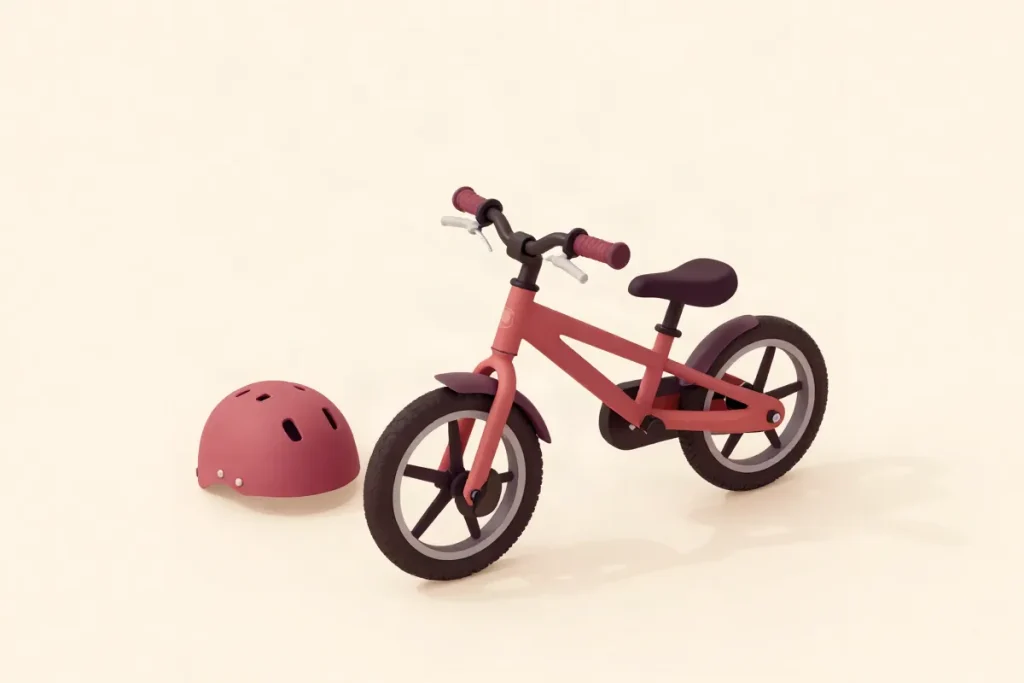
Choose a kids’ bike based on your child’s height and leg length, and choose the brakes based on whether they can confidently squeeze the levers. Your child should sit steadily, reach the ground and control the bike easily.
The age listed on the label is only a guide: children of the same age can be different heights. When choosing a kids’ bike, check the fit and let your child try both brakes. The frame size and brake type affect how confidently they can get moving and stop.
| Wheel size | Child’s height | Age |
|---|---|---|
| 12 inches | from 95 cm | 2–4 years |
| 14 inches | from 100 cm | 3–5 years |
| 16 inches | from 105 cm | 4–6 years |
| 18 inches | from 110 cm | 5–8 years |
| 20 inches | from 115 cm | 6–9 years |
- 4.9 rating for Junion Urbi 16
- 274 reviews of Junion Urbi 16
- from 5 489 ₽ price of Junion Dainy 14
How do you choose wheel size based on your child’s height?
Choose a kids’ bike size primarily by your child’s height and physical build, using age as an additional guide.
Size chart
- 12-inch wheels — from 95 cm; age guide: 2–4 years.
- 14-inch wheels — from 100 cm; age guide: 3–5 years.
- 16-inch wheels — approximately from 105 cm.
- 18-inch wheels — approximately from 110 cm.
- 20-inch wheels — approximately from 115 cm.
Age ranges can help narrow down the options, but they’re no substitute for a test ride: your child should be comfortable getting on the bike and controlling it. If a bike that seems right for their height feels uncomfortable, compare the fit with another bike of the same size.
The Junion Dainy 14 costs from 5 489 ₽. Compare the price against how well the bike fits your child, not just the wheel size.
How do you check the fit and weight of a bike?
The fit and weight are right if your child can confidently put their feet on the ground, hold the handlebars without straining and handle the bike on their own. Have them sit on the model you’re considering and check these things before you buy.
- Footing: Your child should be able to reach the ground securely with their feet.
- Handlebars: Their hands should rest on them without straining, and they should be able to turn them freely.
- Weight: Ask your child to lift and hold the bike on their own. A heavier model is harder to control when starting and stopping.
The Junion Urbi 16 has an aluminum frame, a rating of 4.9 and 274 reviews; reviewers cite its weight as the main reason for buying it. That’s worth bearing in mind, but check whether your child can handle the bike themselves.
Don’t buy a bike “to grow into” if your child struggles to get on, turn the handlebars or keep their balance: that model isn’t right for them yet.
Which brakes are right for a child?
A younger child will usually find it easier to start with a coaster brake: the bike stops when they push the pedals backward. A hand brake is suitable if your child can reach the lever and squeeze it without straining.
- Coaster brake: The bike stops when the pedals are pushed backward. This is easier to learn for a child who still finds it difficult to use a lever.
- Hand brake: Check that your child can comfortably reach and squeeze the lever without straining. The lever shouldn’t touch the handlebars.
Before riding, ask your child to brake several times in a safe area. Check that the bike stops predictably each time and that they can squeeze the lever freely.
If the bike has both types of brakes, explain to your child which one to use and practise before setting off. Don’t go for a ride until they can stop using the chosen brake.
When are gears necessary, and which bike should you choose?
For a first bike, choose one with a comfortable fit and controls your child can manage; the number of gears should suit the routes they ride and their skills.
Among 20-inch bikes, SHULZ Bubble 20 Race and Skill Bike offer 7 gears, while ARIA PRIME has 21. The number alone doesn’t determine how comfortable the ride will be: your child should be able to shift gears without difficulty.
- First rides: Being able to hold the handlebars confidently and watch the road matters more than learning to shift gears.
- Before buying: Ask your child to try shifting gears without taking their attention off the handlebars and the road.
- Everyday rides: A complex drivetrain may be unnecessary; consider where your child will ride and how comfortable they are shifting gears.
How do you choose a helmet and protective gear for first rides?
For a first ride, choose a helmet that sits level, stays in place when your child tilts their head and doesn’t block their view.
Buckle the strap and ask your child to turn their head from side to side. The helmet should stay in place: if it slips, adjust the fit or try another size. Your child should be able to look ahead and turn their head comfortably.
Knee and elbow pads can be useful while they’re learning: children often lose their balance as they get used to riding. Check that the gear doesn’t restrict their arms or legs.
When choosing gear, focus on practical criteria:
- Helmet: Sits level, leaves the field of vision clear and fastens securely with a strap.
- Knee and elbow pads: Comfortable fit and freedom of movement.
- Extra features: They’re worth paying for only if they genuinely improve fit, security or ease of use.
When don’t size charts and familiar advice work?
Size charts and age-based advice are no substitute for trying a bike: height and build can mean that children of the same age need different bikes.
Even if the wheel size is right, the frame may be too long or too high. For children aged 11–12, 24-inch wheels and a frame around 13 inches are often considered, but these are only guidelines and don’t guarantee a comfortable fit. Check the bike with your child.
- Getting on and off: Your child should be able to get on and off the bike comfortably.
- Starting and braking: Your child should be able to set off confidently and stop on their own.
- Turning: Ask your child to turn the handlebars and ride a short distance to check whether they can control the bike.
Don’t choose a bike just because it’s lighter or cheaper. Before buying, check during a test ride whether your child can confidently set off, brake and turn.
Frequently asked questions
Can you choose a bike based on age alone?
What wheel size is right for a child who is at least 115 cm tall?
Does a child need gears?
What protective gear should you buy first?
Sources
- m-velo.by — “How to choose a bicycle”
- blackout-velo.ru — “How to choose a bike for an 11-year-old child”
- velosiped.by — “How to choose a kids’ bike based on height?”
- velik.kz — “How to choose a kids’ bike by age”
- Velomagazin39.ru — “How to choose a bike in 2026: how to choose a mountain, city or kids’ bike”