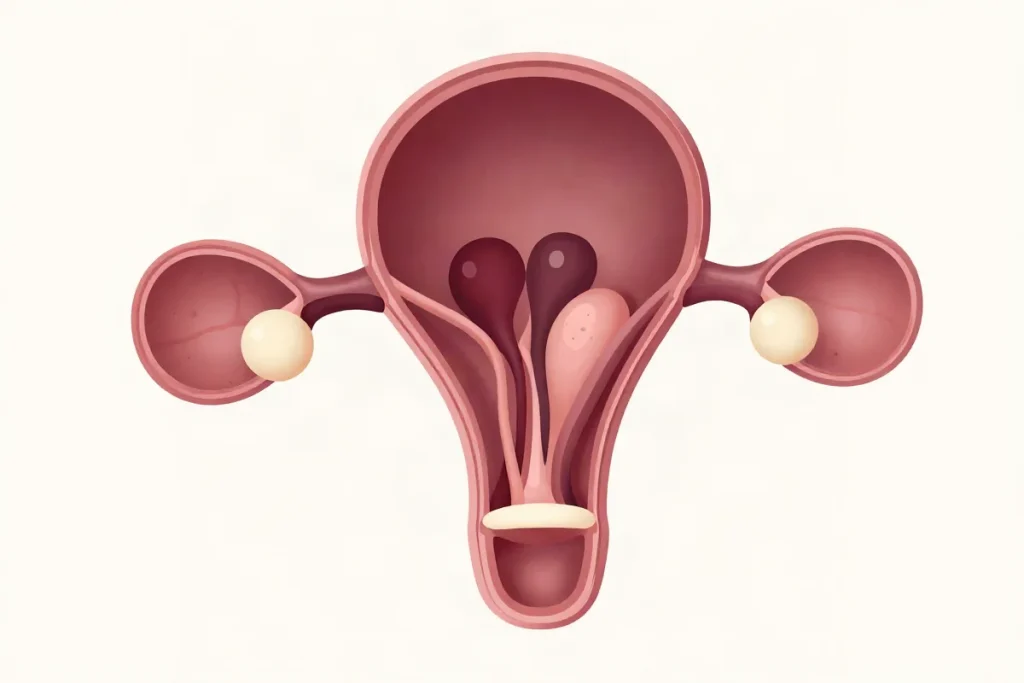
The placenta forms during the first few weeks of pregnancy and plays a critical role in ensuring the safety and health of the fetus. Its main developmental stages include implantation, vascularization, villi formation, and maturation, each affecting the placenta’s ability to support normal fetal growth.
What Happens During the Placental Implantation Stage and Why Is It Important?
Placental implantation begins around days 6–7 after fertilization, when the fertilized egg embeds itself into the uterine lining. Successful implantation secures a firm connection and initiates the formation of placental tissue.
Implantation Features
- Depth of penetration: 5 to 10 mm into the endometrium
- Secretion of hCG hormones to maintain pregnancy
- Start of chorionic villi formation
If implantation is superficial or improper, it increases the risk of miscarriage and later complications such as placenta previa.
How Does the Placental Vascular Network Develop and Why Is It Important?
Placental vascularization begins at week 3 of pregnancy and continues until week 20, when the vascular network reaches maturity. Blood vessels of the mother and fetus develop in close cooperation, enabling the exchange of oxygen and nutrients.
Criteria for Assessing Vascular Development
- Diameter of placental vessels: up to 3 mm by week 20
- Blood flow volume: about 600 ml per minute in late pregnancy
- Villi permeability
| Parameter | 1st Trimester | 2nd Trimester | 3rd Trimester |
|---|---|---|---|
| Vessel diameter, mm | 0.5–1.0 | 1.5–3.0 | 3.0–5.0 |
| Blood flow volume, ml/min | 50–100 | 200–400 | 500–600 |
Insufficient vascular development is linked to fetal hypoxia and intrauterine growth restriction.
How Are Placental Villi Formed and What Is Their Role?
Chorionic villi begin forming from week 2 of pregnancy, growing in size and complexity until week 24. They provide a maximum surface area for exchange between maternal and fetal blood.
Types of Villi and Their Functions
- Stem villi — the structural foundation
- Branched villi — increase exchange surface area
- Thin villi — sites of oxygen and nutrient diffusion
Abnormal villi formation, such as underdevelopment, can lead to placental insufficiency and complications including preeclampsia and fetal growth restriction.
When Does the Placenta Reach Maturity and What Does This Mean for Pregnancy?
The placenta is considered mature around weeks 36–38 of pregnancy, reaching a thickness of 2–3 cm and a weight of about 500 grams. At this stage, it performs its exchange and protective functions most efficiently.
Indicators of a Mature Placenta
- Thickness: 2–3 cm
- Weight: about 500 g
- Villi surface area: up to 15 m²
Premature aging or calcification of the placenta can impair its functions, affecting fetal condition and requiring additional monitoring.
What Factors Can Disrupt Placental Development and How Does This Affect the Fetus?
Placental formation disorders may result from infections, chronic maternal diseases, smoking, and genetic factors. These lead to reduced oxygen and nutrient delivery to the fetus.
- 10–15% of complicated pregnancies are associated with placental insufficiency
- up to 40% of preterm births are caused by placental abnormalities
- 500–1500 ₽ average cost of placental ultrasound analysis in Moscow
Monitoring placental condition through ultrasound and Doppler studies helps identify risks early and adjust pregnancy management accordingly.
Frequently Asked Questions
When does the placenta start functioning?
How can placental problems be identified?
Can placental development be influenced?
What should be done if placental insufficiency is diagnosed?
Key Takeaways
- Placental implantation is the first and crucial stage determining pregnancy success.
- Development of the vascular network ensures oxygen and nutrient supply to the fetus.
- Formation of villi increases the metabolic exchange surface between mother and child.
- Placental maturity is reached by weeks 36–38, providing maximum fetal support.
- Disruptions at any stage can cause complications, including preterm birth and fetal growth restriction.
Understanding the main stages of placenta formation and their impact on fetal health helps expectant parents and doctors take a more responsible approach to pregnancy care. Regular examinations and monitoring of the placenta’s condition are key to a successful pregnancy and the birth of a healthy child.